
The challenge most CISOs face with ITAR compliance is making it sustainable and scalable as your business expands, adds new systems, or works with new partners.
Security leaders today aren’t just tasked with meeting ITAR requirements once a year. You need controls that flex as teams expand, tools evolve, and new threats emerge. Static policies and manual processes are not enough.
In this post, we’ll break down how to approach ITAR compliance as a scalable, repeatable part of your security program, without turning it into a hindrance for business growth.
🚀 Make ITAR Compliance Work for Growth!
See how Theodosiana helps CISOs embed ITAR controls across global teams and workflows, without slowing down productivity.
Why Does Scalability Matter for ITAR Compliance?
If your organization handles export-controlled data, ITAR compliance isn’t optional. But too often, companies rely on static policies and isolated tools that only work in smaller environments.
As your business scales, so does the risk. Bigger teams mean more user access to sensitive data. Remote and hybrid environments introduce more endpoints and cloud services. And auditors expect your controls to scale with that complexity.
If your ITAR compliance process only works on paper or for one business division, you’ve got a gap.
What Makes ITAR Compliance Harder at Scale?
For CISOs, here’s where things usually get complicated:
- Decentralized Access Management - Multiple business units using different systems create inconsistent access control policies.
- Manual Processes That Don’t Scale - Spreadsheet tracking, one-off approval flows, or ad hoc audits fall apart when team sizes grow.
- Cloud and Hybrid Environments - Juggling ITAR data across on-prem, private cloud, and public cloud requires unified control.
- Audit Fatigue - Proving compliance repeatedly drains internal resources if your workflows aren’t built for it.
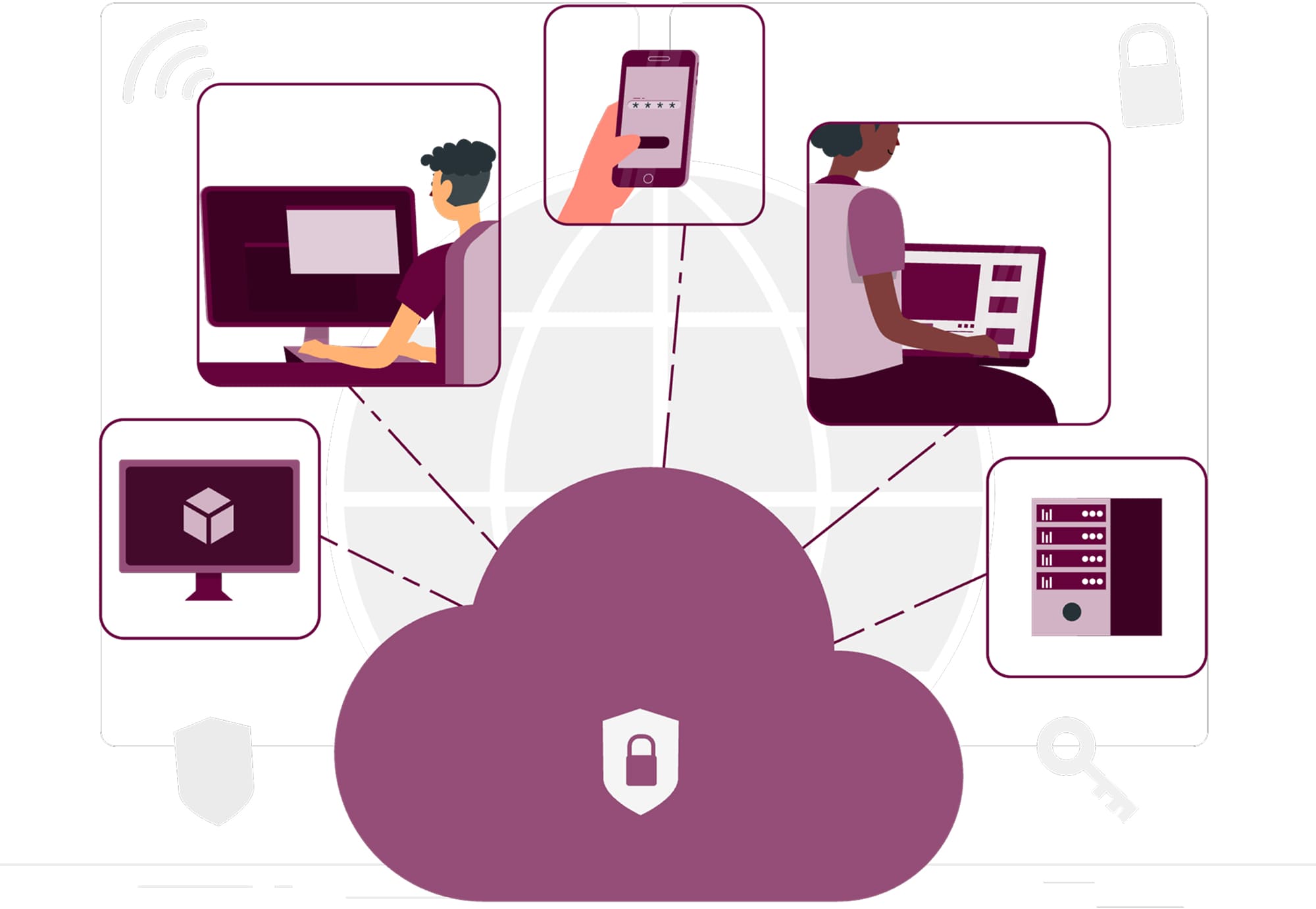
How Can CISOs Make ITAR Compliance Scalable?
Here’s what scalable, CISO-level ITAR compliance looks like in practice:
1) Centralized Access Control at the File Level
- Grant and revoke access based on role, project, or location automatically.
- Avoid manual provisioning where possible and utilise identity integrations.
- Make sure control applies down to individual files, not just systems or folders.
2) Automate Monitoring and Reporting
- Real-time visibility into who’s accessing export-controlled data and when.
- Automated reporting dashboards that align with ITAR audit expectations.
- Alerting for unauthorized access attempts or policy violations.
3) Cloud-Native Security That Meets ITAR Standards
- Use platforms specifically designed for ITAR-controlled data.
- Ensure encryption, logging, and access control travel with the data across environments.
4) Build ITAR Into Your Broader Security Workflow
- Integrate ITAR requirements into existing SOC, SIEM, and incident response processes.
- Treat ITAR as a continuous control, not a once-a-year compliance sprint.
Why It’s Worth Building Now, Not Later
CISOs who wait until scaling becomes a problem often find themselves, to put it bluntly, in a lot of mess.
Building scalable ITAR compliance from the start helps:
- Reduce audit preparation time and costs
- Strengthen overall security posture
- Keep growth on track without compliance bottlenecks
It’s better to be prepared than wait until a problem needs to be fixed.
🚀 Build Compliance That Grows With You!
See how Theodosiana supports CISOs with scalable ITAR compliance.
FAQs: Making ITAR Scalable
What is considered "Technical Data" under ITAR?
Technical data includes information required for the design, development, production, operation, repair, or modification of defense articles. This can be blueprints, engineering drawings, photographs, or software. It does not include information in the public domain or general scientific principles.
Who is required to be ITAR compliant?
Any company, researcher, or individual in the U.S. involved in the manufacture, export, or distribution of defense articles and services as defined by the United States Munitions List (USML) must comply. This includes prime contractors and every subcontractor in their supply chain that handles "Technical Data."
Can ITAR-controlled data be stored in the cloud?
Yes, but with strict conditions. Under the "ITAR Carve-out," technical data can be stored on cloud servers as long as it is end-to-end encrypted using FIPS-validated modules (like AES-256) and is not decrypted while in transit or in storage by the cloud service provider.